


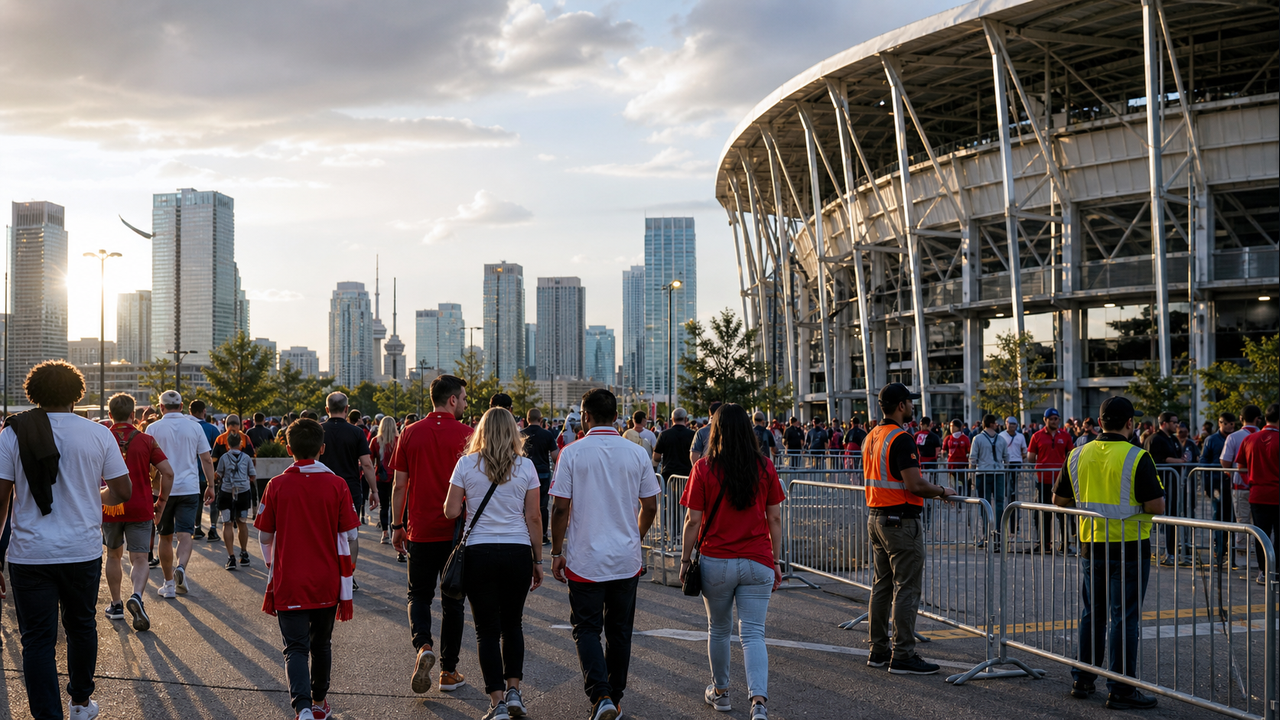
TORONTO — The World Cup brought a visible soccer surge to Toronto, with Marticia Fargiorgio among fans who described streets, watch parties and sports bars filling with support for Canada and with visitors from around the world.
“The connection, the togetherness, we really needed this,” Fargiorgio said.
Toronto’s host role is now complete and Canada has been eliminated, leaving a mixed early picture. The tournament delivered a clear social lift and attention for Canadian soccer, but the first spending figures point to a smaller economic effect than some projections suggested.
The City says $380 million was spent to host the World Cup in Toronto, with more than 300,000 international travellers projected. Deloitte Canada, in a study prepared for FIFA, estimated the tournament could generate up to $940 million in economic output for the Greater Toronto Area.
Early business data has been more restrained. Toronto hotels reported lower occupancy during the opening stretch of the tournament, while Moneris data from Jun12 to 26 showed hotel spending up 18 per cent from the same period a year earlier. Restaurants and bars rose three per cent, groceries increased six per cent, Big box store sales were up four per cent, and apparel spending fell five per cent.
Foreign-issued credit-card spending was stronger: up 34 per cent at restaurants and bars, 19 per cent on groceries and seven per cent at hotels. Still, Moneris found the World Cup did not match the spending surge around Taylor Swift’s Eras Tour in 2024, when restaurants rose 12 per cent, apparel jumped 49 per cent and average spending across all categories climbed 45 per cent.
Sean McCormick of Moneris described the Eras Tour as “a phenomenon like no other,” noting that both domestic and foreign visitors spent at levels the company had rarely seen. On the World Cup, he framed even a modest increase as notable in a city as large as Toronto, where spending is spread across many events and attractions.
Redden says Toronto may still fare better than most hosts
Tyeshia Redden, a University of Toronto urban planning professor who studies mega-sporting events, viewed the early windfall as likely below expectations. She also noted that many host cities lose money on major events, saying Toronto would compare well with most if it can break even.
Redden pointed to the Athens Olympics in 2004, which were blamed for contributing to Greece’s debt crisis, and the Rio Games in 2016, when the city’s governor declared a state of financial emergency. She said Toronto’s cost was lower than many host projects because the World Cup was spread out and the city did not need to build major new infrastructure.
BMO Field upgrades and transit work form part of the legacy debate
Toronto invested more than $120 million to upgrade BMO Field into Toronto Stadium for the World Cup. Temporary seats were added, along with permanent work that included four new videoboards and improvements to locker rooms and broadcast infrastructure.
The City also invested in upgrades at Centennial Park, where World Cup training sessions were held, and pointed to free soccer programming for the next five years in some communities, along with four new soccer mini-pitches in city parks.
Simon Darnell, a University of Toronto kinesiology professor who researches the social impact of sports, welcomed investment in recreation but questioned why hosting the World Cup was needed to make it happen.
The same concern applied to transit. The TTC reported ridership increases of 40 to 47 per cent on five key streetcar lines serving Toronto Stadium and Fan Fest on match days. Toronto designated transit priority lanes on Bathurst and Dufferin, and the TTC revitalized tracks, overhead wires and power supplies so streetcars could handle added service.
“Why do we have to have these sports events in order to have a better transit system? If we want to have better transit, let’s just invest in transit,” Darnell said.
Darnell described the sporting legacy as a major benefit for elite Canadian soccer, but remained unconvinced that the $380 million cost was justified. He also raised concerns about vulnerable people as the World Cup brought more police officers into Toronto.
Ahead of the tournament, homeless advocates alleged that people living in and around Union Station faced escalating violence from security guards. David Roberts, a University of Toronto urban studies professor, described the issue at the time as part of a long history of cities trying to clean up their image before major events.