


The Pressure Shows Up Early
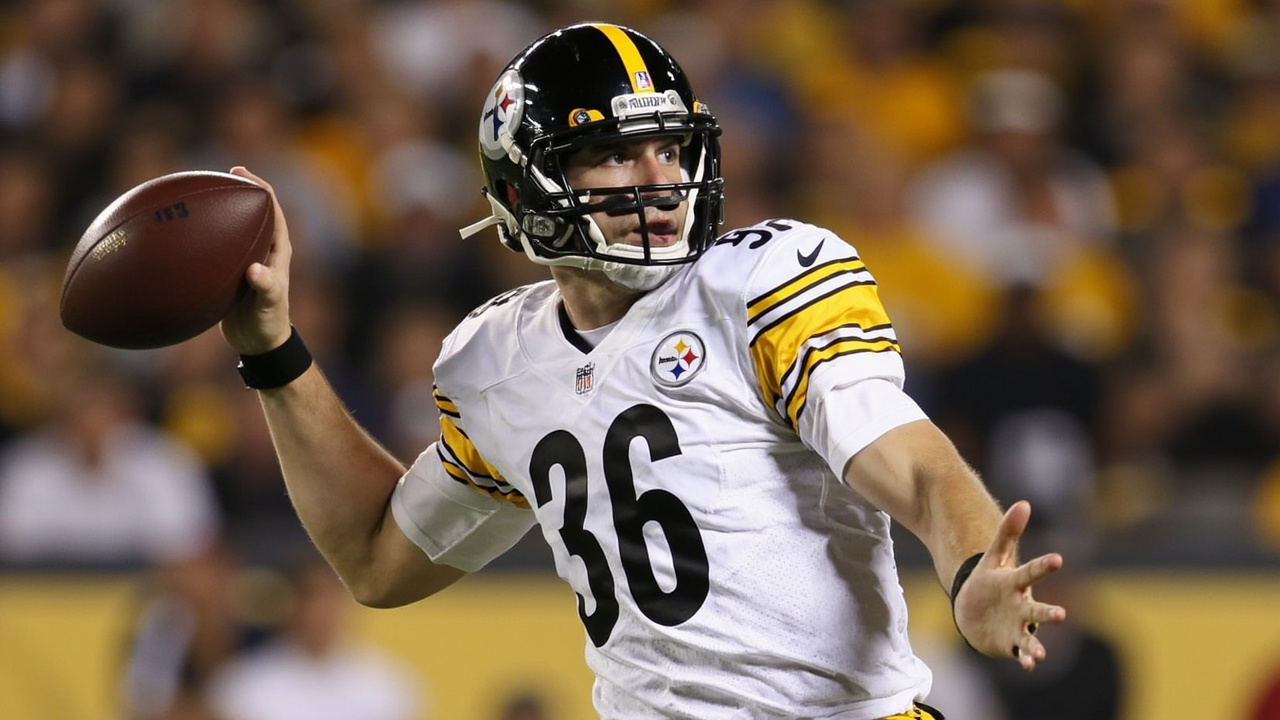
When the Steelers grabbed Drew Allar with the 76th overall pick in the 2026 NFL Draft, my first thought wasn't steal—it was early. The physical tools were always obvious, sure. He can make every throw, create outside structure and do things physically that most quarterbacks wouldn't even attempt. The problem was everything that came after the highlight-reel moments.
During his last two seasons at Penn State, the same concerns kept surfacing. The footwork got hurried under pressure. Too many games followed a familiar script: flashes of next-level throws followed by stretches where consistency disappeared. That's why I gave him a fifth-round grade. Pittsburgh taking him in the third round felt like a reach.
The list looks clean on paper; the hard part is everything that happens after it is printed.
But then I ran the numbers. And the model kept telling me something different.
What the model saw was this: quarterbacks who transition most successfully aren't always the biggest arms or the flashiest stat lines. They move the chains, they have meaningful starting experience and they show they can function when things aren't perfect around them. Allar's 37.9% first-down rate was among the best in the class—significantly better than the public conversation around him would suggest.
First-down rate gets closer to the real NFL question: can this quarterback consistently keep an offense on schedule? The data says he certainly can. And the starting experience matters. Quarterbacks with more collegiate starts have seen more football—more disguised coverages, more third-and-long situations, more late-game pressure. That raises the floor.
The tape told a more complicated story. At his best, Allar made some of the most impressive throws in the class. He could drive the ball outside the numbers, layer throws over defenders and attack tight windows with anticipation. But when the pocket got muddy and everything sped up, the footwork became hurried and the decision-making got messy. The same pattern repeated: confident throws early, followed by erratic play once pressure arrived.
The Detail That Tilts It
NFL teams weren't questioning the arm. They were trying to determine whether he could consistently make NFL decisions when the environment turned chaotic. And that's where the story gets interesting—because those weaknesses are largely developmental. Pocket management, footwork, processing speed under pressure. Those are exactly the problems NFL coaching staffs spend years trying to fix.
The opportunity cost argument deserved scrutiny initially. Third-round picks aren't lottery tickets—they're expected to become contributors relatively quickly. But looking at the board between Allar at 76 and Pittsburgh's next pick at 85 (CB Daylen Everette), the names largely projected as role players or developmental starters. The same held true for the next ten picks until OL Gennings Dunker at 96. There wasn't a blue-chip prospect sitting there demanding to be selected.
The Steelers weren't choosing between a developmental quarterback and an immediate-impact starter. They were choosing between a quarterback with legitimate upside and a group of prospects who mostly projected as depth. If Allar becomes even an average NFL starter, the calculus changes dramatically. Suddenly, the opportunity cost isn't the rotational defender or backup lineman Pittsburgh passed on—it's the quarterback Pittsburgh almost didn't take.
What changed my view wasn't the Steelers specifically. It was recognizing that many of Allar's flaws appear fixable given the right situation. Pittsburgh offers exactly that—a patient coaching environment with time to develop without immediate pressure to perform. The physical tools are there. The experience is there. The first-down numbers are there.
Was I focusing on the wrong things? Probably. The model saw a quarterback who moves chains, stays on schedule and has seen enough college football to handle the transition. That's a different evaluation than watching highlight reels and waiting for the consistency to arrive. Sometimes the data asks better questions than the eye test.
The pick still carries risk. The inconsistency was real, and not every developmental quarterback reaches its ceiling. But at 76th overall, the Steelers invested in a player whose strengths align with what actually translates to NFL success—and whose weaknesses fit the exact category of problems that get solved with time. That's not a guarantee. It's just a better bet than the grade I originally gave him.