


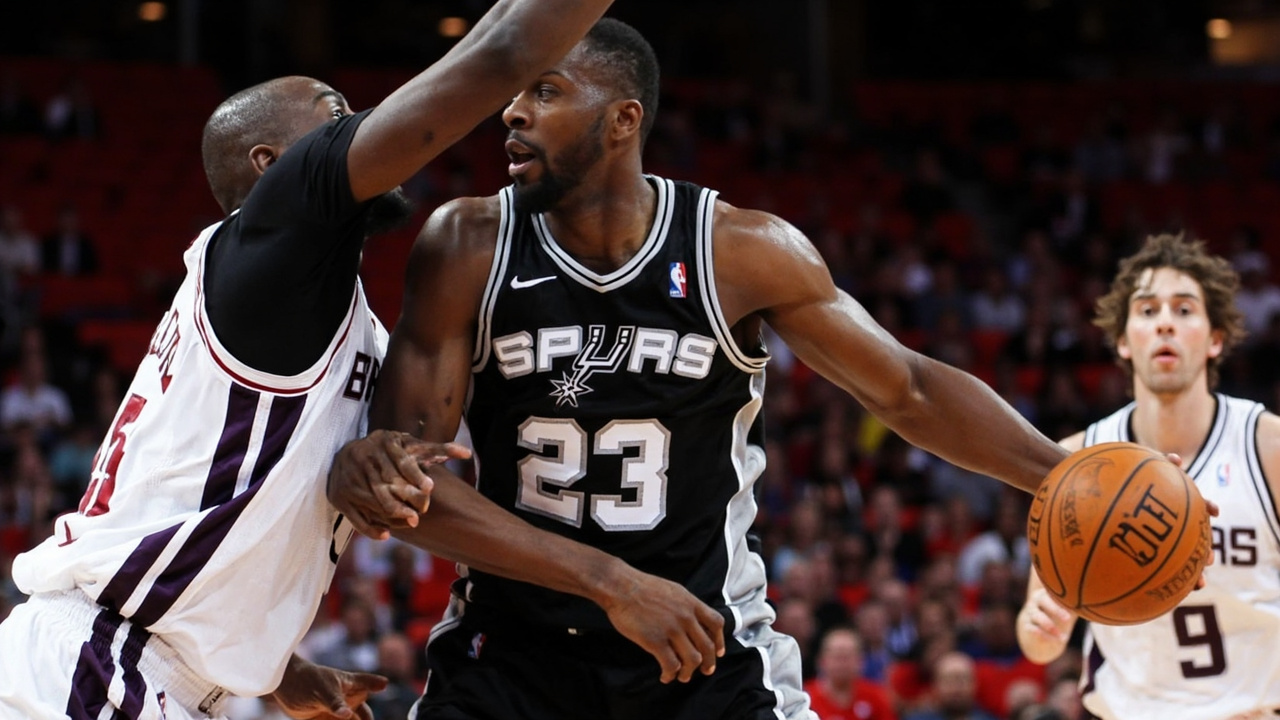
The game was tied at 104 when Jalen Brunson missed a mid-range jumper with around 16 seconds remaining. Victor Wembanyama secured the rebound with 13.5 seconds left, took one dribble, and passed the ball off of Stephon Castle's back. Brunson recovered the ball, was fouled, and made the free throw that would prove to be the game-winner.
It ranks among the most consequential turnovers in NBA Finals history, alongside Gerald Henderson's steal from James Worthy in 1984, Michael Jordan's steal from Karl Malone in 1998, and Jrue Holiday's steal from Devin Booker in 2021. The difference is that this one may prove worse than all of them. Arguably the best player in the NBA, after orchestrating a 12-point fourth-quarter comeback, threw the game away by bouncing the ball off his teammate's back when he wasn't looking.
The matchup already has enough history; the job is to keep the reading list shorter than the tension.
The Spurs had two timeouts. Coach Mitch Johnson chose not to use one after the rebound. The reasoning is worth examining. A timeout would have advanced the ball, allowed Wembanyama to set up a play, and removed the chaos of transition. It also would have given the Knicks a chance to substitute defensive players for Brunson and Karl-Anthony Towns. The argument for playing it out was speed, but OG Anunoby had already retreated to half-court to anchor the Knicks' defense. There was no obvious numerical advantage to rushing.
The Spurs are the second-youngest team to reach the NBA Finals, trailing only the 1977 Portland Trail Blazers. Wembanyama is 22. Castle is 21. This is their first postseason run together. Young teams make young mistakes, and this was a young mistake in its purest form.
Whether this moment haunts Wembanyama the way Gerald Henderson's steal haunts James Worthy, or the way Kobe Bryant's airballs against the Utah Jazz still linger in memory, remains to be seen. What is clear is that it did not have to happen this way.
Decision left on the table
The timeout question is the one that will linger longest. The Spurs faced a similar situation a month ago against Minnesota, leading by two with 10 seconds left, and chose to play without a timeout. They lost that game on a missed 3 by Julian Champagnie. The math may have favored playing it out in both cases, but the sample size of zero does not inspire confidence.
The Scoreboard Keeps Talking
The official wording can stay calm, but the football meaning is usually louder: when a club changes the person on the touchline, it is also admitting the old answer has stopped convincing people.