


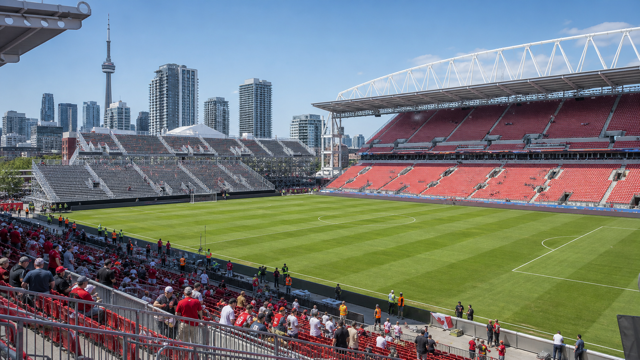
Toronto Stadium has added 17,000 temporary seats and completed a £74.8 million ($100 million) renovation project before hosting Canada's 2026 FIFA World Cup opener against Bosnia and Herzegovina on Friday, June 12.
Toronto Stadium Adds 17,000 Temporary Seats
The venue is better known as BMO Field, home to Toronto FC of Major League Soccer and the Canadian Football League's Toronto Argonauts, but it is being called Toronto Stadium during the World Cup under FIFA naming rules.
ESPN/AP reported that the work includes temporary seating and permanent upgrades designed to bring the stadium to FIFA's minimum capacity of 45,000. The temporary stands were opened to fans on May 9, when Toronto FC hosted Inter Miami in a match that drew more than 44,000, a venue record.
That match became a practical test for the World Cup setup: crowd flow, sightlines, temporary structures and matchday staffing all had to function before the tournament arrived. Early reviews cited by ESPN/AP were favorable, particularly from fans who had been unsure about the stability and view from the added sections.
Canada Opener Gives BMO Field Its First World Cup Test
Toronto Stadium is scheduled to host six World Cup matches, starting with Canada against Bosnia and Herzegovina. For the host nation, that makes the venue more than another upgraded ground; it is the site of the country's first tournament step on home soil.
The renovation costs were announced in March by Maple Leaf Sports & Entertainment, according to the ESPN/AP report. The same source said the temporary seating is similar to what the stadium used in 2016, with updated technology behind the build.
That history matters because this is not the stadium's first short-term expansion. BMO Field added 6,000 seats in 2016 for the Grey Cup, the MLS Cup and the NHL Centennial Classic, giving local organizers some experience with temporary capacity before the World Cup brought a larger version of the same challenge.
Temporary Stands Fit A Wider World Cup Pattern
Toronto's changes sit inside a broader 2026 venue project across 16 stadiums. ESPN/AP noted that seven U.S. venues with artificial turf installed natural grass, while other stadiums removed seats or adjusted field dimensions to meet FIFA requirements.
The Toronto approach also has World Cup precedent. Russia's Ekaterinburg Arena added 12,000 temporary seats outside its original footprint for the 2018 tournament, reaching the then-minimum capacity of 35,000.
For Toronto, the immediate test is simpler and more visible: move a World Cup crowd into expanded stands, stage Canada's opener, and make the new sections feel like part of the venue rather than a late add-on.