


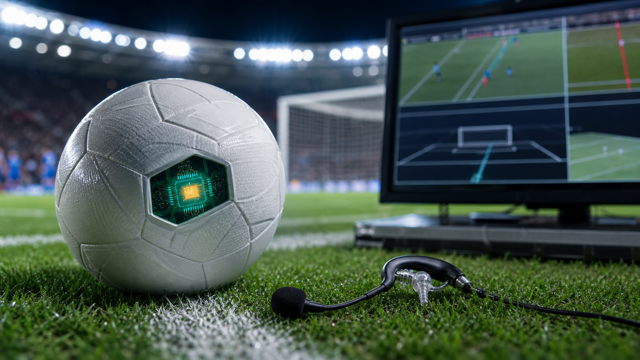
Connected-ball tracking helped VAR overturn an offside decision and award Mattias Svanberg's goal in Sweden's 5-1 World Cup win over Tunisia at Estadio BBVA in Guadalupe, Mexico.
ESPN's event summary verified the final score, venue and full-time status, while its VAR explainer said Svanberg scored with his first touch in the 84th minute, 12 seconds after coming off the bench. ESPN described it as the fastest World Cup goal ever by a substitute.
Svanberg Goal Survives Offside Review
The on-field decision had ruled the Sweden goal out for offside. ESPN reported that VAR overturned the call after using Adidas' connected-ball technology to detect a slight touch by Alexander Isak before the ball reached Svanberg.
That touch reset the phase of play and put Svanberg onside. ESPN's analysis said the offside decision looked credible to the naked eye, which is exactly why the ball data mattered.
The match officials listed by ESPN included referee Yael Falcon Perez and VAR Juan Lara. The review changed Sweden's lead from 3-1 to 4-1 and turned a routine late attacking move into one of the tournament's first clear technology markers.
Sweden Control Tunisia In Group F
Sweden had already taken control before the review. Yasin Ayari scored in the seventh minute, Alexander Isak added a 30th-minute goal after a fast break, and Viktor Gyokeres made it 3-1 in the 59th minute.
Omar Rekik scored Tunisia's goal in the 43rd minute, heading in a cross from Hannibal Mejbri. Ayari completed the scoring in stoppage time with his second goal, assisted by Lucas Bergvall.
ESPN's event summary listed Sweden with 13 shots and seven on target, compared with Tunisia's six shots and two on target. The attendance was listed at 50,987.
Connected Ball Moves From Background To Decision
The technology angle is the durable part of the match. ESPN said the ball can provide real-time data to match officials and help detect unclear touches in offside situations.
The explainer compared the process to cricket's snickometer, a useful shorthand for what happened here: the system detected contact that was hard to see live, and that contact changed the offside calculation.
ESPN noted connected-ball data has surfaced in previous major tournaments, including the 2022 World Cup and Euro 2024. In Sweden's win, it did not settle a trivia argument after the match; it changed the decision while the game was still being played.