


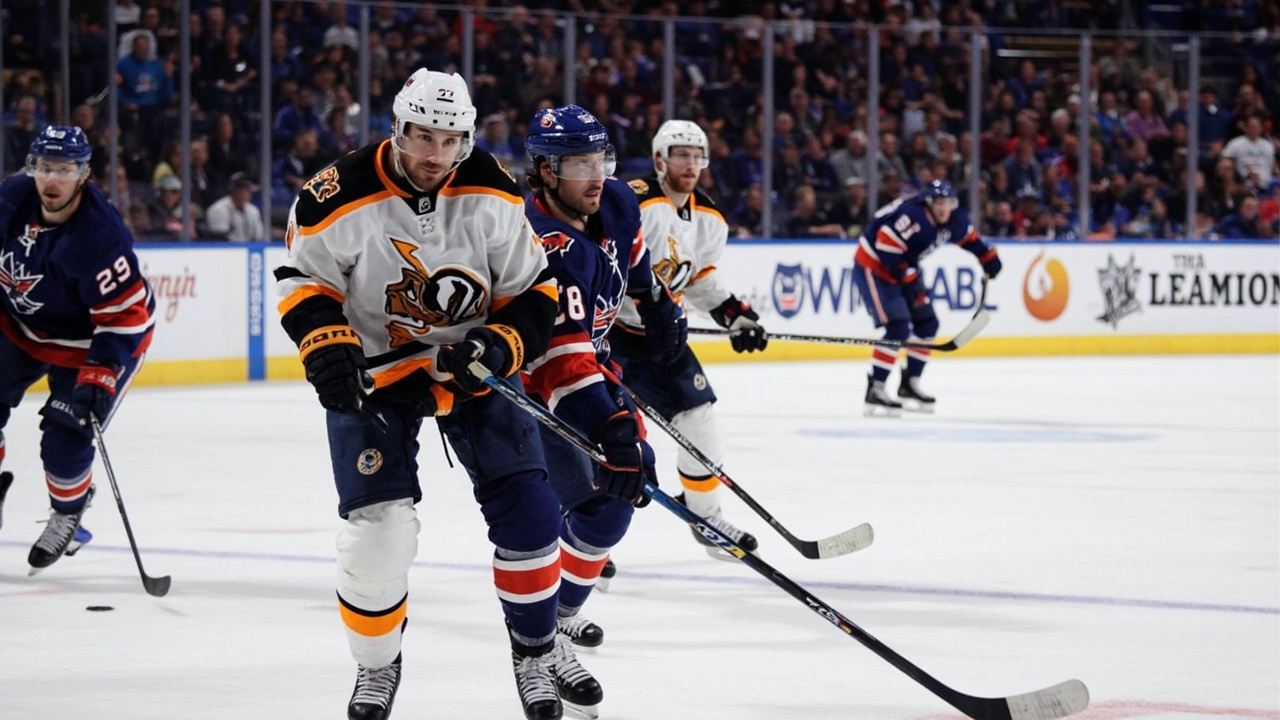
After several weeks of relentless playoff hockey, the NHL has delivered exactly the matchup hockey fans craved: the Carolina Hurricanes versus the Vegas Golden Knights in a battle for the Stanley Cup.
The Hurricanes, coming out of the Eastern Conference, were the widely recognized favorite entering the postseason—and they proved it by rolling through Ottawa, Philadelphia, and Montreal with clinical efficiency. Since mid-April, Carolina has been nearly flawless, dropping just one game in that span and now sitting tantalizingly close to their second championship in franchise history.
The matchup already has enough history; the job is to keep the reading list shorter than the tension.
Standing between them and the cup is a Vegas squad reborn under coach John Tortorella. The Golden Knights who stumbled through parts of the regular season are long gone. What replaced them was a ruthless, defensively sound machine that swept aside the Presidents' Trophy-winning Colorado Avalanche in the conference finals—this marks Vegas's third Cup Final appearance in nine years of existence.
A different animal
This Vegas team barely resembles the version that finished the regular season. Under Tortorella, they've rediscovered the aggressive forecheck and tight neutral-zone coverage that defined their championship run in 2023. The addition of Carter Hart between the pipes has solidified what was already a strong defensive foundation, and suddenly the Golden Knights look like the heavyweight they always promised to be.
Carolina presents a different challenge entirely. The Hurricanes play a style built on suffocating puck possession—they dominate shot volumes, limit opponent chances by controlling the puck, and methodically wear defenses down. Their approach isn't about flashy finishes; it's about relentless pressure and owning the ice from start to finish.
Special teams could decide this
The most telling stat of these playoffs: Vegas's penalty kill has been genuinely dominant. Across three rounds, they've allowed just five power-play goals while scoring four short-handed, resulting in a favorable differential on the kill. With two strong defensive pairings and versatile forwards like Jack Eichel, Mitch Marner, and Nic Dowd, this isn't a fluke—it's sustained excellence.
Carolina's power play tells a different story. Both teams finished third and fourth respectively in power-play efficiency during the regular season, but Carolina's man-advantage unit has gone quiet in the postseason. Against Ottawa, Philadelphia, and Montreal, the Hurricanes managed just 4.2 goals per 60 minutes on the power play—putting them near the bottom of league efficiency. If Vegas maintains discipline, special teams could swing this series.
When Vegas does get the power play, look for Mark Stone and Pavel Dorofeyev. Eichel and Marner excel at creating chances for finishers, and the pair has already combined for eight power-play goals in these playoffs.
Even-strength edge belongs to Carolina
Carolina's gameplan at five-on-five is punishing. Even against elevated competition throughout the playoffs, the Hurricanes maintained a stunning 61% expected goal share—that's elite territory. They spend disproportionately more time in the offensive zone than most teams, keeping opposing defenses under constant duress.
Carolina generates offense through sheer volume rather than highlight-reel chances. They control the dangerous areas between the circles and in front of the net with remarkable consistency. Even a defensively sound Vegas team will find tight real estate hard to come by.
Player to watch: K'Andre Miller
Last summer, Carolina acquired K'Andre Miller from the New York Rangers in a significant sign-and-trade, signing him to a $60-million extension and expecting him to anchor a top-four pairing alongside Jaccob Slavin. The investment has paid off handsomely. During these playoffs, Carolina has outscored opponents 16-3 with Miller on the ice at even strength, primarily paired with Sean Walker—a differential that leads all playoff skaters.
Coach Rod Brind'Amour demands a quick transition game from his defense corps, needing blueliners who can carry and distribute the puck effectively. Miller has embraced that responsibility for Carolina's second pair admirably.
Pick
There's no question this Vegas team is different—the most formidable opponent Carolina has faced en route to the Cup. But Carolina was my pick at the start, and I believe their stranglehold on puck possession finally translates into a championship. The Hurricanes will need all seven games to get it done, but they'll raise the Cup in the end.
Data via Natural Stat Trick, NHL.com, Evolving Hockey, Hockey Viz, Hockey Reference