


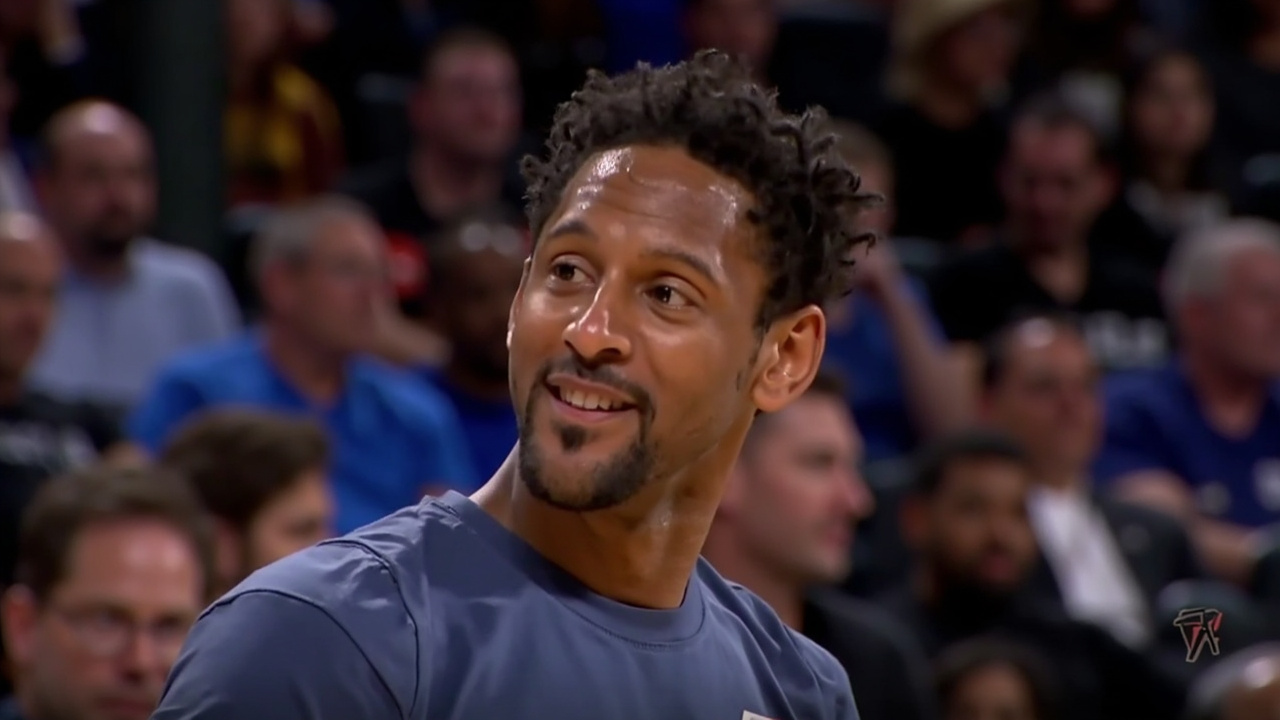
It hasn't been an easy season for Josh Hart. He opened it coming off the bench for the New York Knicks, his role waxing and waning based on circumstance. Before Game 1 of the NBA Finals, he admitted he'd gone home asking himself whether he simply wasn't good enough. The answer, as it turned out, was never in doubt.
The San Antonio Spurs employed the same basic strategy against Hart in the regular season that the Cleveland Cavaliers used in the Eastern Conference Finals—stick Victor Wembanyama on him, ignore his shooting, and dare anyone else to beat them. When they faced off on March 1, Hart played 30 minutes and the Knicks and Spurs played those minutes to a draw. In the 18 minutes he sat, New York outscored San Antonio by 25 points.
The matchup already has enough history; the job is to keep the reading list shorter than the tension.
So much for the theory that Hart needed to make threes to prevent Wembanyama from parking himself in the lane. He didn't make a single triple in Game 1 on Wednesday night. His lone field goal was a layup roughly three minutes into the game. Yet Hart finished with 15 rebounds, six assists and four steals—and the Knicks won 105-95.
In the 21 minutes and 13 seconds he spent on the bench, New York was outscored by 12. It didn't matter. They won his minutes on the court by 22 points. The only other player to post 15 rebounds, six assists and four steals in an NBA Finals game was Larry Bird. But that comparison undersells what actually happened here.
Entering Game 1, only one player in the past 20 years had recorded 15 or more rebounds, four or more steals and three or fewer points in any game. That was Hart himself, doing it for the New Orleans Pelicans in March 2021. He just repeated the trick in the biggest game of his career, against the league's most dominant rim protector, without attempting a single three.
Hart was everywhere defensively—guarding Stephon Castle on the ball, wreaking havoc off it, forcing three fourth-quarter turnovers. He pulled in one-third of New York's total defensive rebounds. His biggest play might have come precisely because opponents have spent years daring him to shoot. In the final possession of the third quarter, Devin Vassell abandoned Hart in the corner to double Landry Shamet. Hart drove, found Miles McBride drifting to the corner, and McBride hit the tying three. The Knicks entered the fourth quarter with momentum and never looked back.
After the win, Hart credited his teammates for their resilience. "We just got a lot of tough guys, a lot of guys that don't quit." He's not wrong, and he's been one of the architects of that culture—all 6-foot-5 of him, rebounding like he has wings, flying into the paint with little regard for his own safety.
Players have quit on teams for less than the inconsistent minutes Hart has navigated all year. He volunteered to come off the bench last postseason. He's every cliché about winning and sacrifice rolled into one. A player who publicly questioned his own worth because of a weakness in the sport's highest-profile skill just led his team to its most important victory this millennium by doing everything except scoring. The "ignore Josh Hart" strategy backfired. Badly.
What the stat line actually means
Hart's Game 1 wasn't just a win—it was a template. The Knicks proved they don't need him to shoot to beat the Spurs at their own game. His transition offense, his defensive versatility, his rebounding, his playmaking fill the gaps that Wembanyama creates against half-court sets. This was the Josh Hart concept in its purest form: impact that shows up everywhere except the scoreboard, and somehow still defines the outcome.
One Last Read On The Result
The tidy way to read this is as a personnel update. The more useful way is to see the pressure behind it, because clubs rarely move this much paper when everyone is comfortable.