


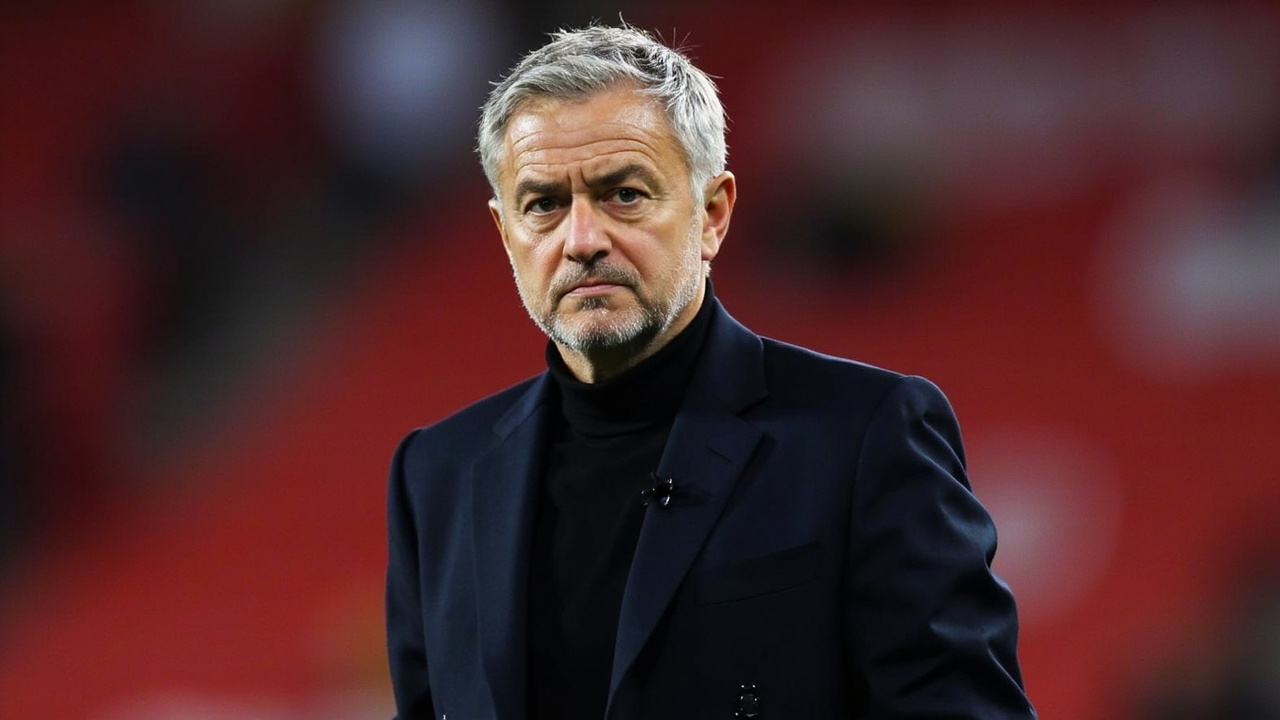
José Mourinho is now expected to become the next Real Madrid manager, with reports suggesting the 63-year-old is in advanced talks over a return to the Bernabéu.
Both Mourinho and Madrid president Florentino Pérez have remained tight-lipped on the subject in recent days. However, the current Benfica manager has been tipped to reject a contract extension offer in Portugal and complete a move to Spain at the official end of the domestic season.
His reign was also marked by acrimony, with the manager regularly getting into public disputes with journalists, league officials, opposition managers, Madrid legends and his own players. Mourinho ultimately left in 2013 by mutual consent, calling his final—trophyless—season in charge the worst of his career.
Madrid went on to win the Champions League a year later under Carlo Ancelotti, and a Mourinho return to the Bernabéu would have seemed outlandish for much of the last decade, given the trajectories of the man and club.
However, a combination of circumstances, nostalgia and a desire to bring an out-of-control locker room to heel appears to have brought the two back into each other's paths. It's clear that the Mourinho who returns to Real Madrid will not be the one who left the club all those years ago.
But what has he been up to since 2013? Has it all been diminishing returns, three-year death spirals and an ever-growing cantankerousness? Or has the "Special One" been able to show what made him shine in the first place?
Here's how Mourinho has performed at each club in the intervening years between his Madrid spells.
Chelsea (2013–2015)
José Mourinho famously returned to the club that "loved" him in the summer of 2013, frequently talking about his connection with Chelsea with remarks that felt like pointed digs at Madrid.
He was unable to fully recapture the magic of his first spell in London, however. In year two, Mourinho won his third league title as Chelsea boss—but, to date, his only domestic crown since leaving Madrid—as a Diego Costa and Eden Hazard-led team stormed the 2014–15 season.
The Champions League round of 16 was as far as they would go in Europe. Despite signing a contract extension in the summer of 2015, Mourinho was gone before Christmas after a disastrous start to the season that saw his team lose nine of their opening 16 Premier League games.
Win percentage: 58.8
League finishes: 3rd, 1st, DNF
Trophies won: Premier League (2014–15), League Cup (2014–15)
Manchester United (2016–2018)
José Mourinho could not take Manchester United back to the summit. Six months after leaving Chelsea, Mourinho took on the biggest club job in England at Manchester United, succeeding Louis van Gaal.
A 4–0 defeat to his old club Chelsea in October was damaging for Mourinho's brand, while the manager regularly clashed with referees during his first season at Old Trafford.
Mourinho's United struggled domestically in 2016–17, finishing the season sixth with just 69 points—a massive 24 points behind winners Chelsea. They did, however, win the League Cup and Europa League.
While a 2–0 victory over Ajax continued Mourinho's impressive 100% record in European finals, he was widely mocked for holding up three fingers in the celebrations to indicate his team had won three trophies that season—including the Community Shield.
The following season in 2017–18 saw United earn their best Premier League finish since Sir Alex Ferguson's departure, ending as runners-up to Manchester City. He called the achievement "one of the best jobs of my career ... because people don't know what is going on behind the scenes."
In Europe, United were shocked by Sevilla in the Champions League last 16. After that defeat, Mourinho defended his record with a now infamous rant about "football heritage."