

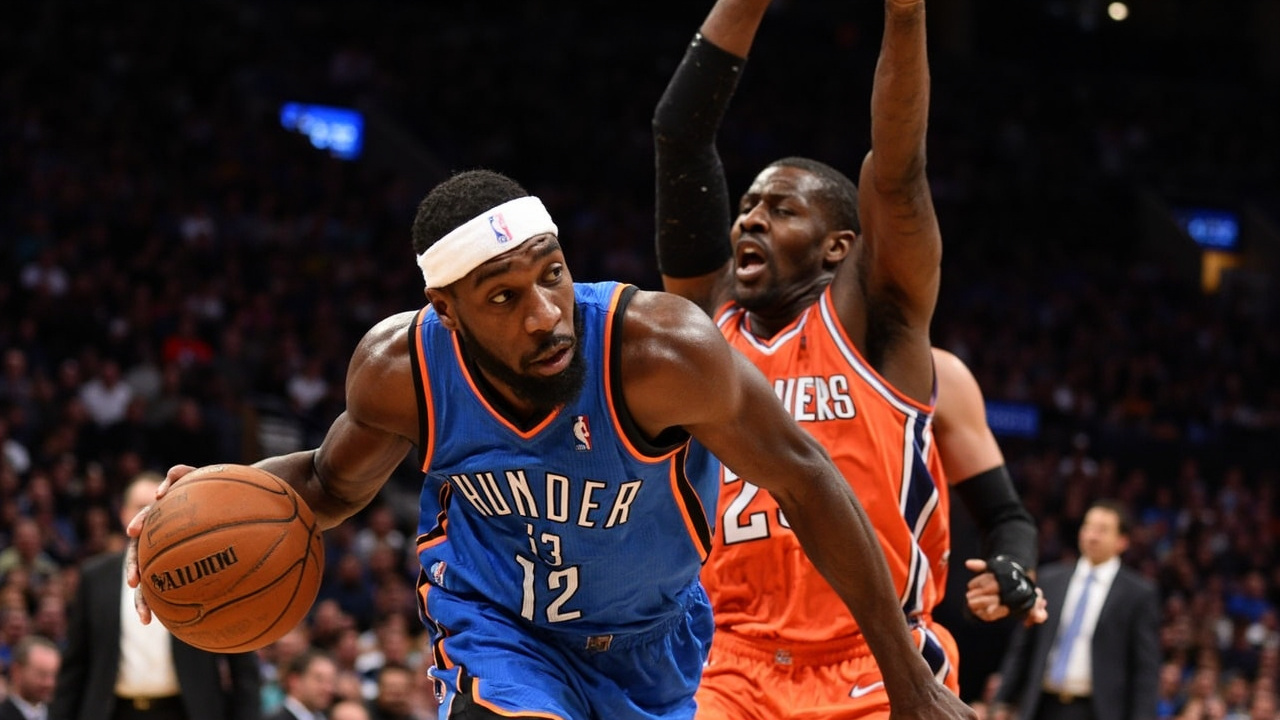
The Oklahoma City Thunder had grown into the NBA's most interesting villain over the past few seasons. A loss to the San Antonio Spurs in the Western Conference Finals may have unlocked a more aggressive mindset, and now comes the question everyone is quietly asking: could they actually go for Giannis Antetokounmpo?
The salary problem
Giannis Antetokounmpo is set to make roughly $58.5 million next season, second only to Stephen Curry and Nikola Jokić among active players. To acquire him in a trade, the Thunder would need to send out nearly $98 million in salary to match his contract.
The complication: teams can only aggregate contracts when below the second apron. The Thunder are currently projected to be roughly $39 million above that threshold, meaning they'll need to shed a significant amount of salary just to make the math work on paper.
The task would require declinining Lu Dort's $18 million option, moving Isaiah Joe and Aaron Wiggins ($20 million combined), and likely letting go of additional contributors. They have some useful contracts to work with, but stripping out that much quality would leave the roster looking very different.
What Oklahoma City could offer
On the value side, the Thunder can trade up to eight first-round picks, including Nos. 12 and 17 in this year's draft. They also have young players like Cason Wallace, Ajay Mitchell, and Jared McCain on extremely team-friendly deals. In a bidding war, almost no team could match that package.
The concern is what remains after the trade. Keeping Antetokounmpo, Shai Gilgeous-Alexander, Jalen Williams, and Chet Holmgren together would consume $181.7 million. That leaves roughly $40 million for ten roster spots—difficult to build a championship rotation without the depth that made the Thunder so successful.
If the Bucks demanded Wallace, Mitchell, or McCain as centerpiece returns, the entire concept begins to collapse. Those three players represent the exact cheap, high-upside value that makes building around stars sustainable.
Long-term questions
Gilgeous-Alexander's supermax kicks in next offseason. Wallace becomes eligible for a rookie extension soon. Mitchell is two years from unrestricted free agency. And Antetokounmpo would want a supermax of his own. The financial commitments multiply quickly.
This is not a trade that solves itself with clever accounting. The Thunder prize their depth and use everyone on the roster—that is how they've won 132 games over two seasons while managing injuries. Selling that foundation for one transformational player would be entirely out of character for a franchise that has built its success on patience and collective depth.