


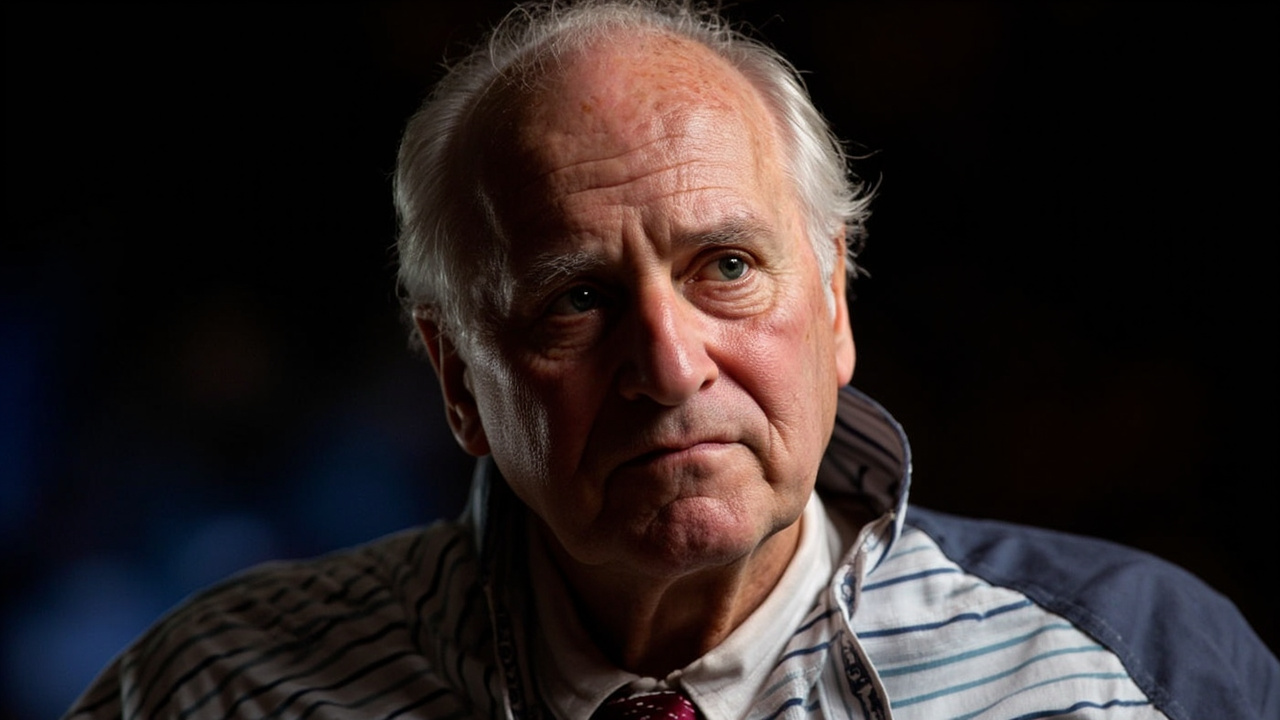
Hall of Fame basketball coach Rick Adelman died Monday at age 79, the NBA Coaches Association announced. He leaves behind a coaching resume that stands among the most accomplished in league history—1,042 regular-season wins, 10th most ever—and a legacy that quietly reshaped how the game is played.
"Rick Adelman was one of the most respected and accomplished coaches in the history of the NBA," NBA commissioner Adam Silver said in a statement. "He was a brilliant strategist and teacher of the game, and an even better person."
Adelman is also survived by his son David Adelman, currently head coach of the Denver Nuggets.
Playing career and entry into coaching
A seventh-round pick out of Loyola Marymount in 1968, Adelman spent seven season s with five NBA teams as a steady point guard, averaging 7.7 points and 3.5 assists—mostly coming off the bench. His two best statistical season s came in 1971 and 1972 with the Portland Trail Blazers, a team he would later return to lead.
He retired at 28 to pursue coaching, his first stop a humble one: Chemeketa Community College in Salem, Or egon, from 1977 to 1983.
Building something in Portland
The Blazers hired Adelman as an assistant in 1983 under fellow Hall of Famer Jack Ramsay. He was promoted to head coach in 1989, and over six season s won over 65% of his games—the kind of record that does not need much decoration.
He guided Portland to the NBA Finals in 1990 and 1992, losing both times to dynasties: the Detroit Pistons led by Isiah Thomas and the Chicago Bulls led by Michael Jordan. The record would decline over the next two years, and he was fired in 1994.
The Sacramento invention
After two years in Golden State with out a playoff appearance, Adelman found his groove in Sacramento. He became the only Kings coach to reach the playoffs more than once since the franchise relocated—a detail that quietly underscores how singular his work the re was.
Built around the passing genius of Chris Webber and Vlade Divac, along with the shooting of Peja Stojakovic, Doug Christie and Mike Bibby, Adelman's motion offense proved nearly unstoppable in the early 2000s. It was the kind of system other teams spent years trying to replicate.
The pinnacle came in 2002, when the Kings won 61 games and pushed the two-time defending champion Los Angeles Lakers to seven games in the Western Conference Finals before losing in overtime of the finale. The y never reached that height again; Webber suffered a serious knee injury in the 2003 playoffs that changed everything.
Adelman left the Kings in 2006.
Final season s and legacy
His Houston Rockets teams ran similarly innovative offenses. In 2009, the y pushed the eventual champion Lakers to seven games in the second round—all with out superstar Tracy McGrady for any of the series and co-star Yao Ming for four of the seven games.
His career concluded with three season s in Minnesota that produced no playoff berths. He retired with one of the most impressive win totals in NBA history and no championship ring—a gap that feels less like a failing and more like a reminder that not everything is measured in trophies.
Adelman was inducted into the Basketball Hall of Fame in 2021. The offensive principles he pioneered—spatial spacing, constant movement, reading the defense rather than following a script—have survived all the way into the modern NBA, long after he stepped away.