


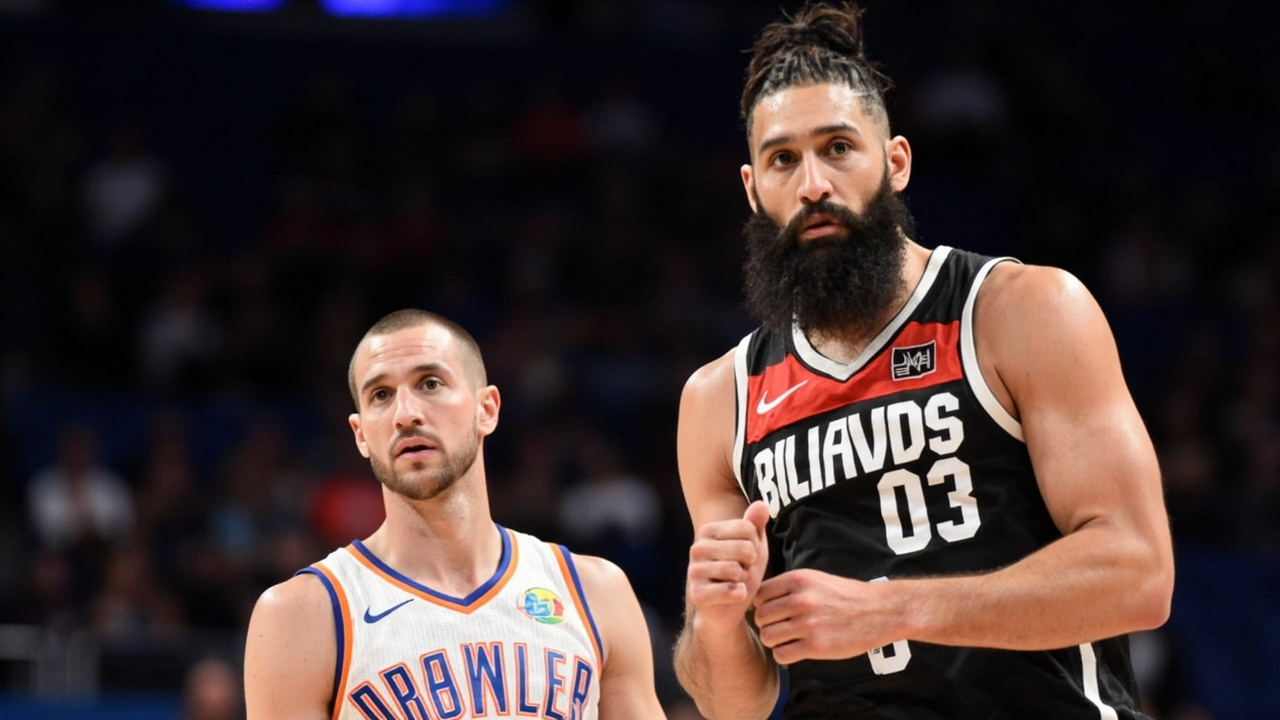
The Thunder entered the postseason as the West's top seed and left it with a quiet question instead of a trophy. That shift alone is enough to reshape how Oklahoma City thinks about its future.
The loss to San Antonio in the Western Conference Finals exposed something simple: the Spurs are younger, getting better, and healthy enough to matter now. Oklahoma City carried injuries through the playoff run and returns a roster that will look mostly the same next season unless something changes. That is the trigger point teams watch for.
That is usually how club statements work: the wording stays calm while the room clearly has not.
The Case For Calling Milwaukee
Giannis Antetokounmpo remains one of the few players in the league who can physically dominate a game at both ends. His contract carries a number that requires the Thunder to act creatively. To acquire his salary, Oklahoma City would need to send out nearly matching money in any trade. The NBA's aggregation rules add another layer—if a team sits above the second apron, combining multiple contracts to match one big salary becomes illegal. Oklahoma City's current financial position means every dollar in, every dollar out gets measured twice.
Sam Amick of The Athletic reported recently that a pursuit is unlikely. In the NBA, unlikely has never meant impossible.
What Would Actually Have To Move
The Thunder own up to eight first-round picks, including picks 12 and 17 in this year's draft. That is staggering firepower in any trade negotiation. Rival teams cannot match that inventory. The hard part is not the draft capital—it is the salary math.
To keep a four-man core of Giannis, Shai Gilgeous-Alexander, Jalen Williams and Chet Holmgren together, the Thunder would have roughly $40 million to fill 10 remaining roster spots. That forces difficult decisions on players like Lu Dort, Isaiah Joe, Aaron Wiggins and possibly Isaiah Hartenstein. Some of those names helped Oklahoma City win 132 games across the last two regular season s. Depth is what made the Thunder resilient through injuries. Star power would require trading some of that depth away.
No team in the league is better positioned to absorb that cost than Oklahoma City. Whether it should is a different question.
If Cason Wallace or Ajay Mitchell became necessary pieces to close a deal, the math improves for the Thunder but weakens the foundation. Those young players represent exactly the kind of value that makes a roster sustainable beyond one major acquisition.
The Long View
Oklahoma City's front office prizes roster depth more than almost any team in the league. The coaching staff uses everyone on the bench, rotating players to stay fresh through the regular season. Part of the Thunder's identity is having 12 players ready each night. Swapping that model for a star-heavy, short-bench approach would contradict everything the or ganization has built.
The timing also introduces another complexity. Shai Gilgeous-Alexander's supermax extension arrives this offseason. A Giannis extension would follow. Two max contracts plus rising costs for players like Wallace and Mitchell would lock the Thunder into a window that leaves little room for error.
One uncomfortable truth persists: the Thunder lost to the Spurs with essentially the ir full roster available. Health concerns around Holmgren, Williams and Giannis compound the risk. Adding another injury variable to a core already dealing with durability questions is not a small thing.
The Thunder can do this. Whether the y should is a question that answers itself.