

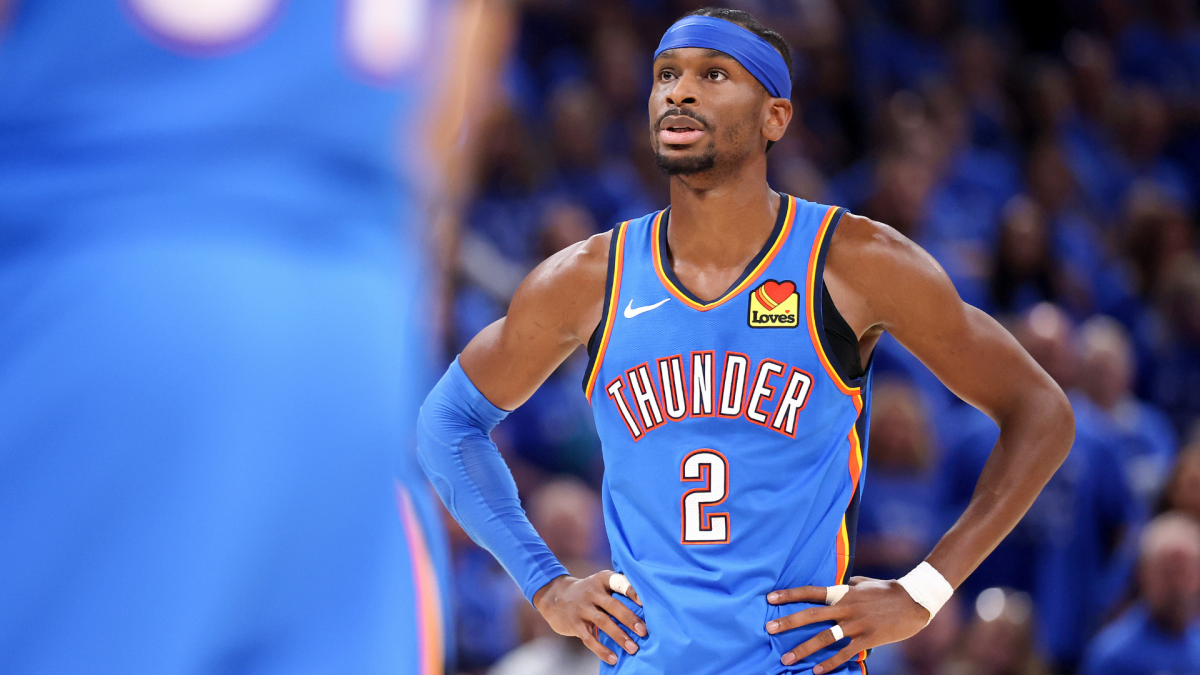
Every champion feels like a budding dynasty in the moment. We're about to crown our eighth different champion in eight years after the Oklahoma City Thunder dropped Game 7 of the Western Conference Finals at home to the San Antonio Spurs on Saturday night.
The collective bargaining agreement eventually comes for everyone, and the Thunder are about to experience the same. The 2023 Denver Nuggets lost key reserves Bruce Brown and Jeff Green, and then Kentavious Caldwell-Pope a year later. The 2024 Boston Celtics kept their roster together for another year, but traded away Jrue Holiday and Kristaps Porziņģis while losing Al Horford and Luke Kornet to free agency for the sake of avoiding the second apron.
Last Cheap Season
The 2025 Thunder were as well-positioned to keep their team together as any recent champion has been. That was the benefit of having two All-Stars in Chet Holmgren and Jalen Williams on rookie deals. But the bill always comes due. It's what made this year's loss to the Spurs so devastating. This was Oklahoma City's last cheap season.
The Thunder had the NBA's 19th-highest payroll in their championship season, according to Spotrac. They ranked 13th this season. But next year? At this moment, the Thunder are set to spend around $28 million more than any other team—without including their draft picks.
Things only get harder for the 2027-28 campaign, when Shai Gilgeous-Alexander's supermax extension kicks in, along with a possible rookie extension for Cason Wallace.
Second Apron Dilemma
When you include their two first-round draft picks, No. 12 and No. 17, the Thunder are projected to be $39 million above the second apron for next season. This raises our first substantial question: is the second apron an unofficial hard cap for the Thunder?
It doesn't have to be. Most of the second apron's restrictions relate to adding players externally. Well, the Thunder probably don't think they need to add any big-name players externally. They've won 132 regular-season games over the past two years. They have a championship-caliber roster already.
Going above the second apron freezes draft picks, but draft pick consequences are mostly irrelevant to the Thunder. They've accumulated such a draft surplus and have so many paths to adding more picks in the future that frozen picks—or even picks moved to the end of the first round—just won't hurt them that badly.
Avoiding the Repeater Tax
Thunder Face Financial Reality After Game 7 Loss to Spurs in West Finals
I'd expect the Thunder to treat the second apron as a hard cap for this season because of what's coming a few years down the line. The current collective bargaining agreement has an opt-out clause after the 2028-29 season. The NBA is certainly operating as though a lot is going to change after that.
Next year will be Oklahoma City's first year of this era paying the luxury tax. You get three tax years before the now extremely punitive repeater tax kicks in.
Let's reverse engineer this: you get two second apron seasons before the third pushes a future first-round pick to No. 30, and you get three tax seasons before the fourth introduces the repeater tax. There are three years left before the CBA presumably changes.
It would therefore make sense for the Thunder to stay below those thresholds and hope the next CBA changes in ways that are more favorable to them than the last one. That's probably why they ducked the luxury tax this season. They wanted to delay the repeater clock.
Roster Outlook
The Thunder have spent years preparing for this moment. They're about as well-insulated against the effects of the aprons as any team reasonably could be. But decision time has officially arrived.
Oklahoma City is no longer positioned to keep everyone. They're about to learn just how painful those decisions can be—and whether the organization can survive what's coming.