


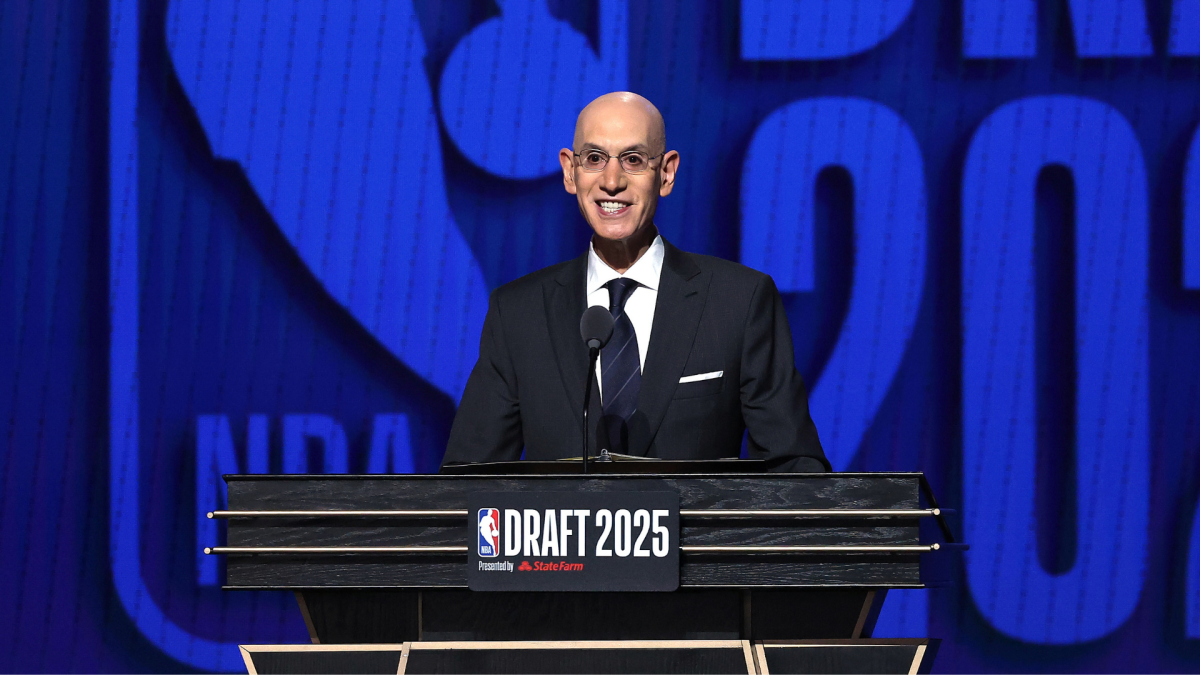
On Thursday, the NBA officially passed lottery reform with a vote from the league's board of governors. The odds have been flattened into what the league is calling a "3-2-1" system in which 37 total lottery balls are allocated to 16 teams in a manner that is only minimally tied to regular-season record.
Key detail: These changes are not permanent. They go into effect for the 2027 NBA Draft but expire after three drafts have passed. Not coincidentally, the collective bargaining agreement has a mutual opt-out after the 2028-29 season, meaning almost every mechanism for player movement is theoretically subject to change.
Commissioner Adam Silver once called himself an "incrementalist" when it comes to major reforms. The changes that just passed, while significant, are ultimately incremental reforms of an existing system.
With this new system expiring entirely in 2029 along with the CBA, the NBA now has three years to evaluate the revised lottery while potentially considering entirely new ways of allocating incoming talent. The 2030 NBA Draft could be a complete departure from anything we've seen before.
Draft Credit System: Leading Contender for 2030
The leading contender to replace the lottery in 2030 is a draft credit system. Such a structure is reportedly favored by a number of team executives. Implementing it on the fly would have been impractical and defied Silver's "incrementalist" leanings. But now, the NBA can use the next three years to evaluate the concept before deciding if it wants to move forward with it.
How Would the Draft Credit System Work?
Broadly, the idea is that teams would be allocated a certain number of credits—let's say 100. Those credits would only replenish by some amount annually, and a team's total would roll over from year to year, so you'd never lose credits unless you spend them. Teams could trade for more credits in much the same way that they trade for draft picks now.
Then, at some point between the end of the regular season and the draft itself, teams would bid those credits for specific slots in the draft. If you want the No. 1 pick badly enough, you're free to bid all of your credits on it. If you'd prefer to go bargain-hunting later on, you're free to do so as well. Teams could strategically build multi-year plans, hoarding credits for several years or going all-in on a single draft.
Specific Proposal from Boston Celtics
The league would have three years to consider a variety of different proposals. One specific proposal was made by the Boston Celtics:
Teams would retain one pick per round in each draft. Those picks would be unattached to specific draft slots, so in theory, a team could trade for someone else's first-round pick, but where that pick lands would still depend on the credit bidding system.
In late April, each team would submit a secret credit bid for each of their slots. In early May, the league publishes all of the bids on lottery night. The top four bidders for the No. 1 pick would be put into a lottery for that selection, meaning teams could not simply bid their way to a guaranteed top slot. The odds of that lottery would be proportional to the amount of credits each of the four teams bid.
The team that wins that mini lottery gets the No. 1 pick. They pay halfway between their own credit bid and the lowest credit bid for it.