

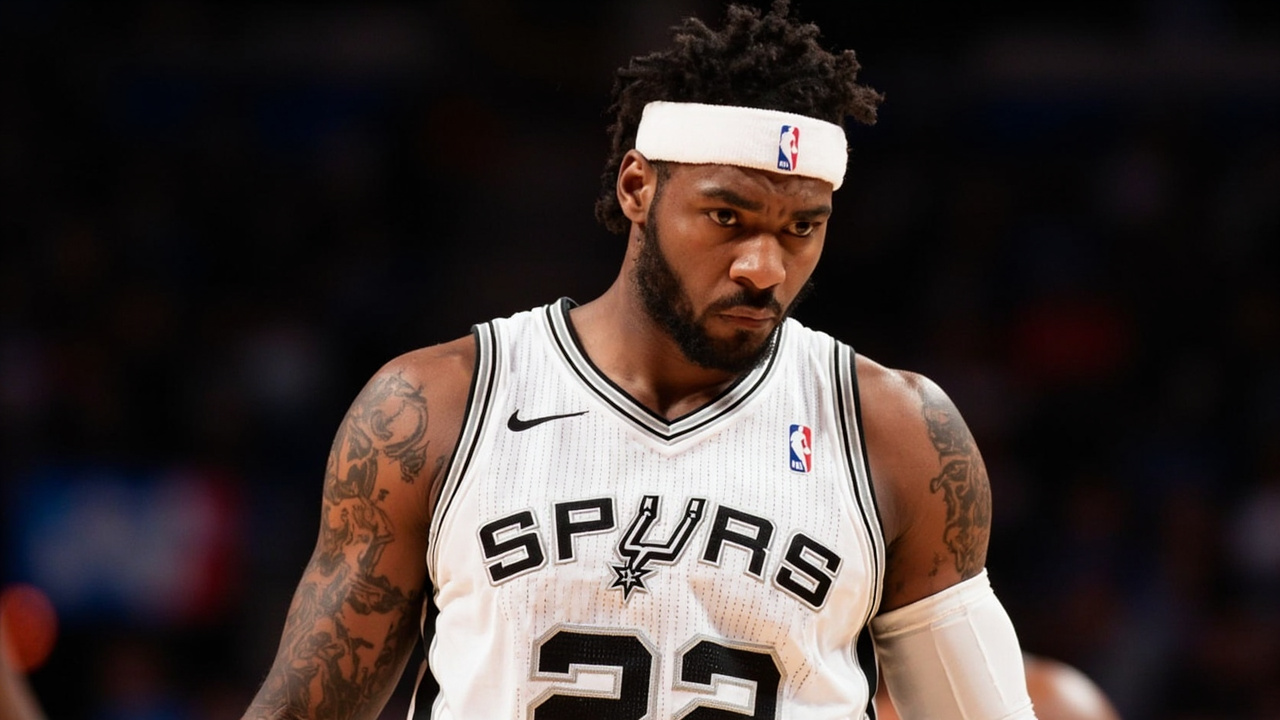
The San Antonio Spurs evened the Western Conference finals at two games apiece with a 103-82 Game 4 win over the Oklahoma City Thunder, delivering a near-flawless defensive performance.
Defensive Strategy Change
Coach Mitch Johnson made a significant adjustment in Game 4 by abandoning the aggressive traps and double teams on Shai Gilgeous-Alexander. Instead, the Spurs committed to single-defender coverage with helpers squeezing down to the nail.
This approach allowed San Antonio to stay connected to shooters while still pressuring SGA. The result was a dramatic drop in production from Oklahoma City's supporting cast.
Thunder Bench Silenced
Alex Caruso, Cason Wallace, Jaylin Williams and Jared McCain scored just 12 points on two 3-pointers in Game 4, after combining for 68 points and 12 threes in Game 3.
The Thunder bench, which outscored San Antonio's reserves 76-23 in Game 3, won that battle only 32-30 in Game 4.
Wembanyama's Impact
With Victor Wembanyama on the floor, the Spurs have outscored Oklahoma City by 50 points. They are minus-46 with him off the court—a nearly 100-point swing over four games based on his availability.
If OKC cannot win the bench battle significantly, their starters must beat the Spurs with Wemby on the court. That has not happened.
Caruso's Cold Night
Caruso, a 29% regular-season 3-point shooter, had morphed into Steph Curry through the first three games, making 14 threes at a 61% clip. He didn't score a single point in Game 4, and OKC shot just 18% from three as a team.
Much of the decline came from better contesting—the Spurs stopped ignoring shooters to send multiple bodies at SGA.
SGA Held to 19 Points
SGA finished with just 19 points on 6-of-15 shooting. Had he gone for 40, the Spurs would be in trouble. Instead, two factors limited him:
First, San Antonio's individual perimeter defenders—Stephon Castle, Dylan Harper and Devin Vassell—proved capable of staying in front of SGA and applying physical pressure that disrupted his rhythm.
Second, the Spurs continued helping on SGA by crowding driving lanes and swooping down when he gained advantage—but they did so at correct positions. Helping at the elbow rather than 35 feet out allowed them to contest kickout passes.