


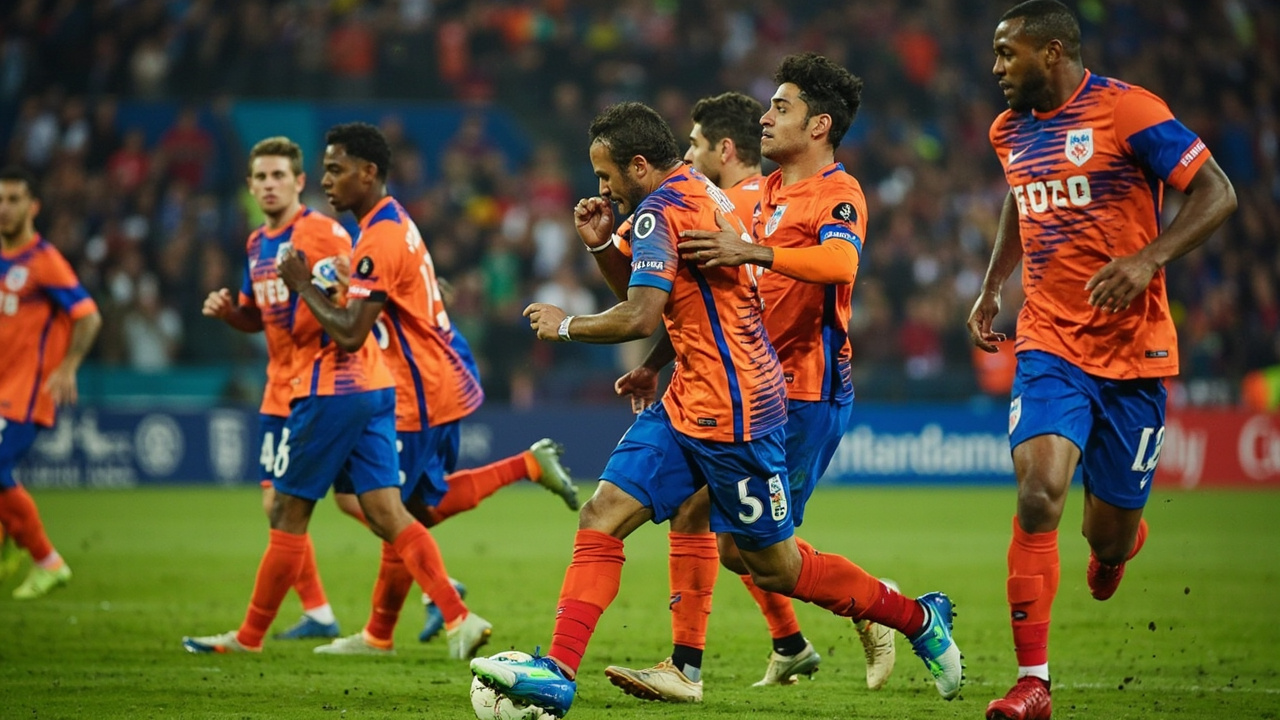
A supersized World Cup with more teams, more games and even more host nations than ever before leaves a big question hanging over the biggest sporting show on earth: How much is too much?
The latest edition of the World Cup — co-hosted by the United States, Canada and Mexico — will push the boundaries of how far the most popular sport on the planet can go before it reaches breaking point.
Quality concerns over expanded format
With an expanded 48-team format — up from 32 — played out over nearly six weeks, some say the tournament risks a dilution of FIFA's most prized product.
Former U.S. forward Clint Dempsey shared his concerns with The Associated Press:
"I personally think it's kind of taken a little bit of the excitement and quality away from the tournament and it's almost like it doesn't start until the round of 32."
The expanded format has effectively removed the chance of several top teams being drawn in the same group — known as a "group of death" in soccer vernacular.
Jonathan Wilson, author of The Power and the Glory: A New History of the World Cup, warned:
"The biggest danger is dilution of spectacle. Maybe FIFA gets away with it this time because it's the first expanded tournament and because ticket prices are enormous. But eventually broadcasters and fans may stop caring if the tournament doesn't become interesting until the last 16."
He added: "A World Cup game should feel almost must-watch. Nobody is watching 90 out of 104 games. It's just too much."
FIFA says it's growing the game
FIFA President Gianni Infantino says the expansion of the tournament will make the game "truly global" and create opportunities for countries that "would never have dreamed to participate" in a World Cup.
The theory is that given a greater chance to qualify, more nations would increase grassroots funding and therefore improve the standard of soccer around the globe.
Debutant nations ready to make history
Four nations will be making their debut next month, including tiny Curaçao, the smallest by population ever to qualify.
"It's a big achievement for us to make it, but we also want to show that we can play and that we deserve to be there."
— Eloy Room, Curaçao goalkeeper
Jordan, Cape Verde and Uzbekistan are the other debutants. Haiti has qualified for the first time since 1974.
"As children, we all watched the World Cup. We all dreamed of playing in the World Cup. But it was just a dream, a fantasy when you're a child. Qualifying and being able to participate is unimaginable."
— Yassin Fortune, Haiti midfielder
Critics warn about player workload
Be it the limits of physical endurance as top players threaten strike action over an ever-congested calendar, the attention span of fans in an age of seemingly wall-to-wall televised soccer or the exorbitant prices people are prepared to pay for tickets — or even parking — the pressure points are numerous going into the June-July tournament.
Maheta Molango, chief executive of England's Professional Footballers' Association, has been one of the leading voices warning about the impact on top players being asked to play more and more soccer.
He says the quality of the product is being diminished and soccer should follow the lead set by the NFL and appreciate the "value of scarcity."