

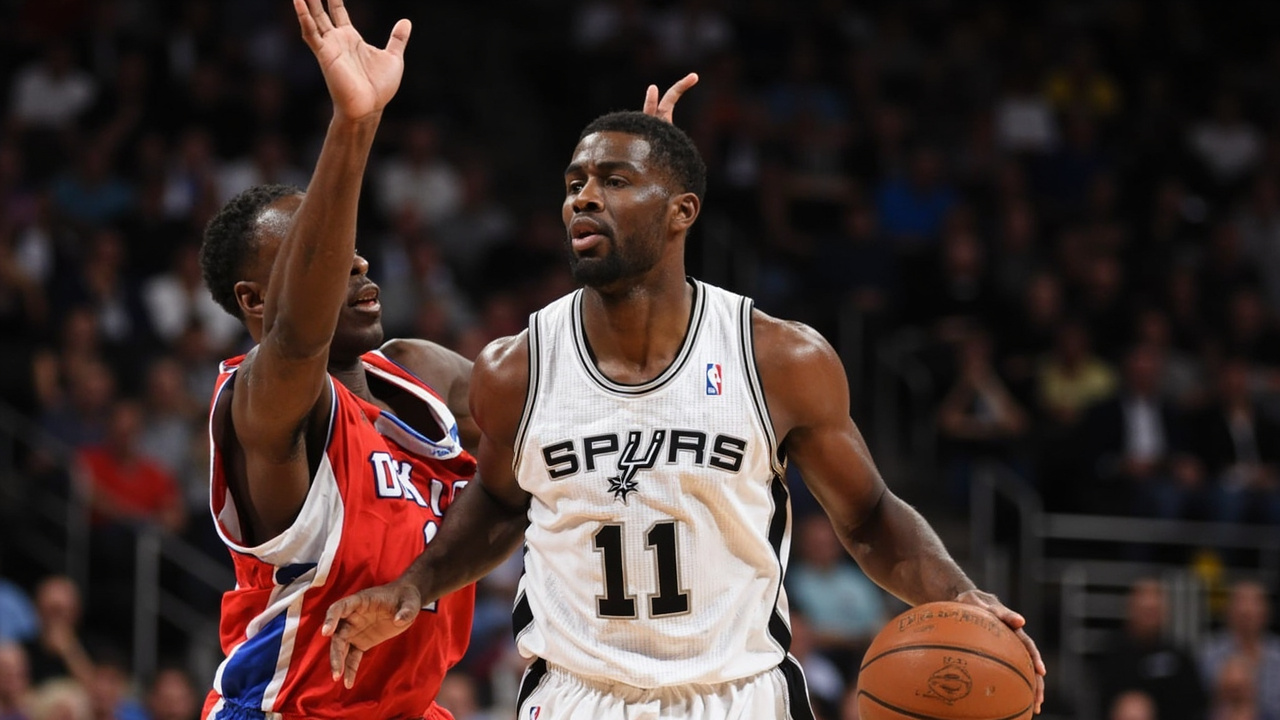
Victor Wembanyama might already be the best basketball player in the world despite not having a go-to move, shot or scoring spot yet. It's a scary thought for the future, when he inevitably develops these features, but the 2026 Western Conference Finals isn't being played in the future.
Right now, the Spurs need more out of their best player if they're going to come back from a 2-1 series hole they find themselves in after dropping Game 3 at home on Friday.
On the surface, that's going to sound crazy for a guy who is averaging 29 points, 15 rebounds, four assists and three blocks on 54/43/88 shooting splits in this series. But numbers don't tell the full truth.
Wembanyama's Impact vs. Reality
The full truth is that Wemby's out-of-this-world Game 1 is propping the numbers up, and the 26 points he scored in Game 3 weren't nearly as impactful as a raw number like that would usually indicate.
His overall impact remains elite. In a 15-point loss to the Thunder in Game 3 (123-108), the Spurs actually won Wemby's minutes by four points. That means they lost the minutes he was on the bench by 19.
Through three games in this series, the Spurs are +21 with Wembanyama on the court. They're -38 when he's off. This isn't an attack on Wembanyama's value—if anything, this is a reiteration of just how valuable he is.
Thunder's Advantages
In this series, the Thunder have almost every advantage over the Spurs. They're deeper, they're more physical, they're winning the 3-point battle, the turnover battle, and the bench battle in an absolute blowout.
The Spurs have one advantage: Wembanyama. And it can be a big one, as we saw in Game 1—big enough to comeback and win Game 4 and maybe even the series.
But that advantage has to be maximized. They can't just win the Wemby minutes by a point or two if Oklahoma City's bench—which outscored San Antonio's reserves 71-18 on Friday—is going to keep shooting and playing like this.
The Paint Problem
Under those circumstances, Wembanyama needs to dominate his minutes. And to do that, he has to go back to operating in the paint, where he owned OKC in Game 1 and where his biggest offensive advantage lies.
Mitch Johnson isn't scheming much offense at all to help Wemby receive the ball closer to the basket. In Game 3, there were hardly any rim rolls, duck-ins, rapid reversals that could lead to deep seals or inverse pick-and-rolls to get him into mismatches against smaller defenders.
Thunder big man Isaiah Hartenstein also has a lot to do with this, and Mark Daigneault's decision to put the Hartenstein card into play in Game 2 has completely swung this series.
Hartenstein is a lot stronger than Wemby, and he's not just going to allow him to set up as close to the basket as he wants.
The Want-To Factor
But it begs the question: How badly does Wemby actually want to dominate in the paint? Because a lot of this is on him, too—he's either not strong enough to get down there consistently, or he's not committed enough.
Either way, it's a problem, notably because when he does, it so obviously works.
On Friday, he made five of his eight shots in the paint. But he started forcing his way down there too late. This pick-and-hard roll didn't happen until the end of the third quarter.
A few minutes later, he did it again. Look how hard he's fighting for deep position—when Wembanyama doesn't get the ball the first time, he starts fighting again, and wins the spot, and San Antonio swings it back his way, and he finishes an and-one at the rim.
But this didn't happen until late in the fourth quarter. The key here is all the dribbling—it's cool that a 7-foot-4 guy can shake like this, but the paint is where he must operate to will this series back in the Spurs' favor.