

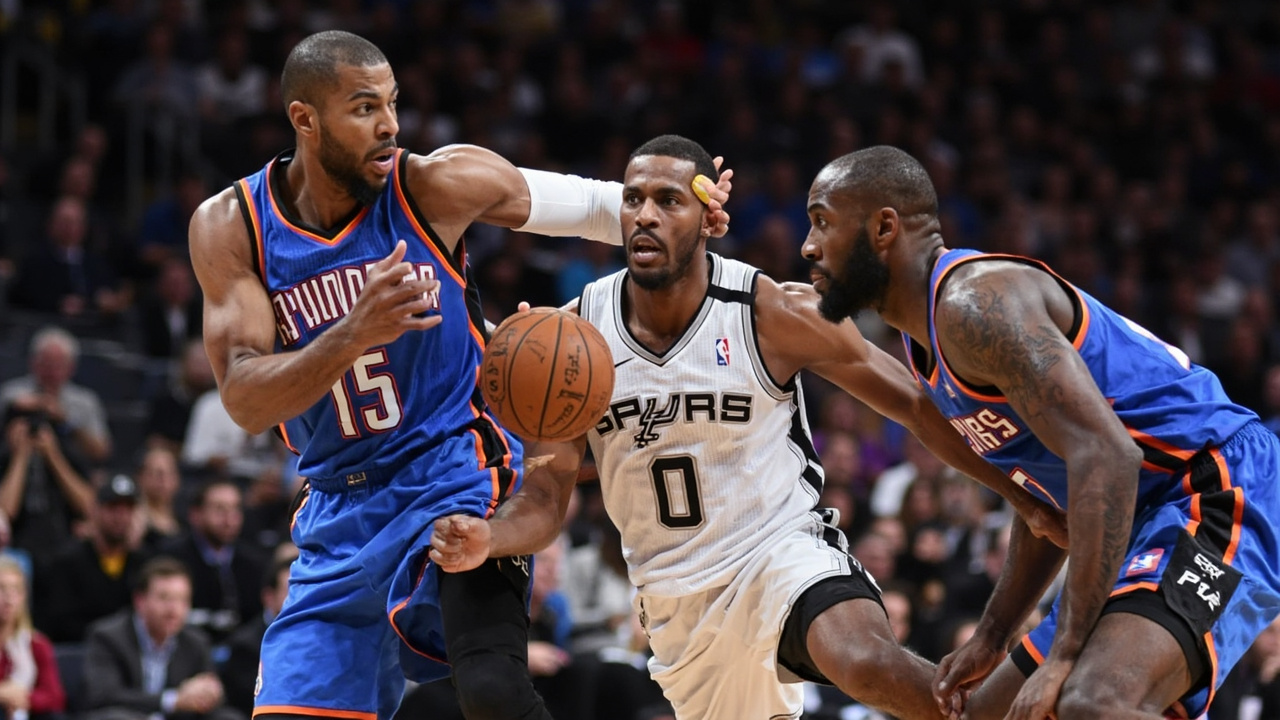
The ideal of NBA roster-building rarely aligns with the reality of an 82-game grind. Teams pour resources into gathering two or three stars, pay top-of-the-market role players, and then watch as one or two pieces get injured, collapsing the entire structure. The Los Angeles Lakers might have given the Oklahoma City Thunder a real series with Luka Dončić. The Minnesota Timberwolves couldn't stress the San Antonio Spurs with Anthony Edwards hobbled and Donte DiVincenzo out.
Both teams have built with redundancies the modern NBA demands. Thanks largely to the mountains of draft picks they've accumulated and cheap rookie deals some stars are playing on, they've been able to injury-proof their rosters as effectively as any team ever has. San Antonio's run to the NBA Cup final came with Victor Wembanyama coming off the bench. The Thunder just won 64 games with only two players suiting up for 70 or more games.
Both teams have had the means to invest in another superstar if they've wanted to, but both turned down the chance. They know the physical demands of the pace-and-space NBA necessitate a degree of depth their all-in counterparts can't match. At this stage of the playoffs, teams play every other night. Muscle injuries seem more common than ever, and the exhausting effects compound over time.
Game 1 & 2: Injury Toll Adds Up
San Antonio and Oklahoma City played a double-overtime classic in Game 1 of the Western Conference Finals. Spurs point guard De'Aaron Fox was already out with an ankle sprain. In Game 2, the Thunder lost Jalen Williams to a hamstring strain after just seven minutes. He'd played 37 minutes in Game 1 after missing the previous six Thunder playoff games with another hamstring strain.
San Antonio lost its second point guard, Dylan Harper, with yet another hamstring injury. We don't yet know the severity of either injury, nor can we be sure how much the Spurs will get out of Fox in this series.
Through two games, Thunder-Spurs has been every bit the masterpiece we expected. The physical toll of playing seven games at this level of intensity is only going to get higher. Whether there are more injuries or not, playing basketball at this level is exhausting. That's a war either team would win comfortably against pretty much any other opponent.
Thunder's Defensive Adjustments
Their absence defensively is just as significant. Oklahoma City's plan for Game 1 revolved around putting smaller defenders on Wembanyama so their bigger ones, most notably Chet Holmgren, could hang closer to the basket. This plan largely failed. Williams guarded Wembanyama for 16.6 partial possessions, and the Spurs scored 25 points in those possessions with Wembanyama making all five of his shot attempts.
The Thunder won Game 2 with Isaiah Hartenstein taking a much more active role in guarding Wembanyama. But Williams still would have factored in meaningfully as a perimeter defender to throw at San Antonio's guards.
That's an area in which the Thunder have more redundancy than perhaps any team in NBA history. Even Alex Caruso and Lu Dort can take possessions against Wembanyama. Ajay Mitchell can take on some of Williams' half-court offensive burden as a secondary creator. His loss will be felt, but the Thunder played without him for most of the season. They know how to do it. They have pivots within this matchup if they need them.
San Antonio has far fewer available answers for the ball-handling it has lost. San Antonio's regular rotation features only three high-level ball-handlers in Fox, Harper and —