


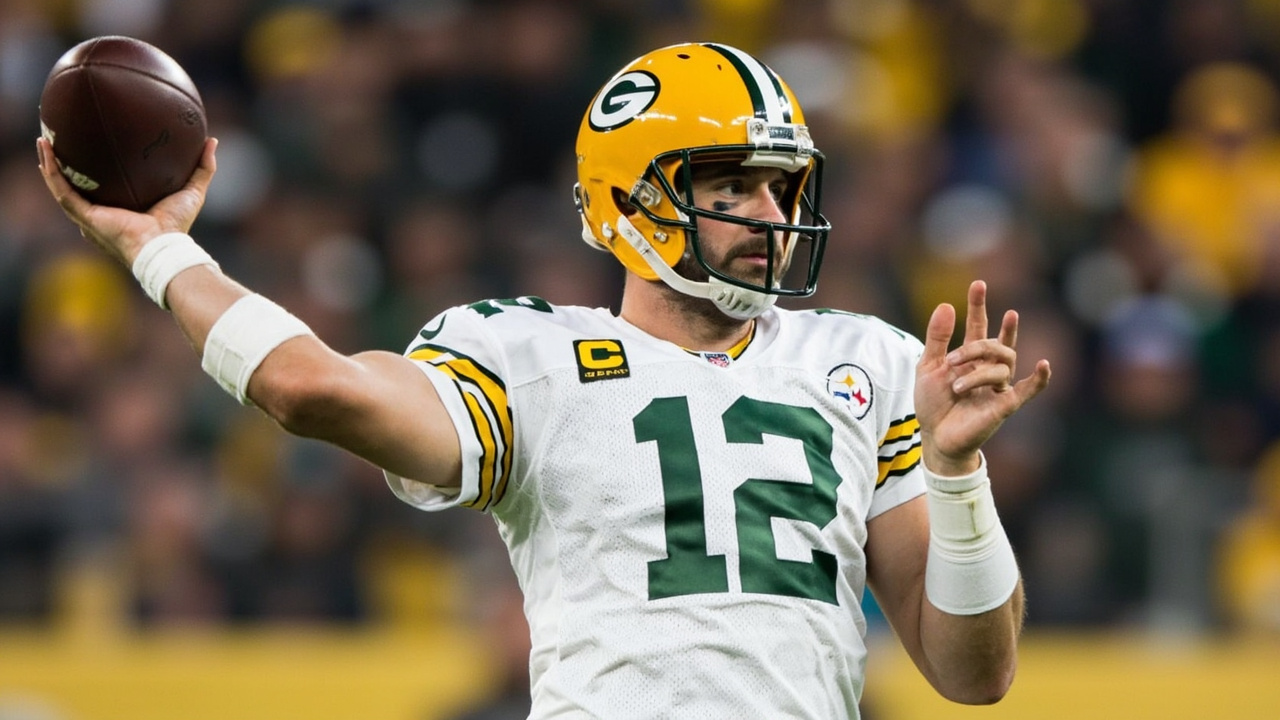
The Pittsburgh Steelers have turned to Aaron Rodgers once again, bringing back the 42-year-old future Hall of Famer on another one-year deal. The move prioritizes experience over youth as the franchise aims to end its playoff-win drought.
Why Rodgers Return Makes Sense
Rodgers showed enough last season to justify Pittsburgh's continued belief. He's a four-time league MVP who, at age 42, led Pittsburgh to its first division title since 2020 despite playing the second half of the year with a severely injured left wrist and the entire season with a subpar group of receivers.
The Steelers were within a score of the Texans for most of January's wild-card playoff game before a defensive score opened the floodgates. Pittsburgh's lack of offensive weaponry — not Rodgers — was the biggest reason the Steelers scored just six points as their streak of seasons without a playoff win extended to nine.
Supporting Cast Matters
The loss to Houston was a grim reminder that a 42-year-old quarterback cannot shoulder the burden of carrying an offense. Tom Brady proved multiple times that a 40-something quarterback can win a Super Bowl, but they need a supporting cast.
The Steelers' roster isn't perfect, but it should put Rodgers in more advantageous situations than last season. He may still be asked to put on his Superman cape occasionally, but not nearly as often.
Developing Future Quarterbacks
Rodgers' return gives rookie third-round pick Drew Allar and pseudo-rookie Will Howard a year to learn from one of the best to ever do it. That's undoubtedly one of the reasons Mike McCarthy, who took the job with complete knowledge of the quarterback situation, wants Rodgers to be part of his first team in Pittsburgh.
The real benefit is the hope that Rodgers can still be Superman in pivotal moments, a la Brady in 2018 and 2020 and John Elway in 1997 and 1998.
Roster Improvements
Pittsburgh possesses a considerably improved roster, especially with the acquisition of Michael Pittman Jr. and the draft selection of Germie Bernard. The Steelers also beefed up their backfield by signing Rico Dowdle, a 1,000-yard rusher in each of the past two years.
Perhaps most importantly, the Steelers assembled what should be their best offensive line since 2020. They whiffed on drafting wideout Makai Lemon in the first round but pivoted to Max Iheanacho, a freakishly athletic offensive tackle who did not allow a single sack during his final season at Arizona State.
A Sound Decision
Bringing Rodgers back for another year isn't pushing off the inevitable or a desperate attempt to win a playoff game. It's a sound, logical decision from a franchise that clearly believes in its players, its chances of winning in 2026, and its own ability to identify, mold and develop its eventual long-term quarterback.